
VRF
- Universal Branch Pipe
- DA Series
- ME Series
- MI Series
- TA Series
- GR Series
- BSR Series
- LG Series
- HIT Series
- HAE Series
- CL Series
- LNX Series
- MHI Series
- SAM Series
- PNS Series
- TRN Series
- AX Series
- VRF Y Joint
- VRF Branch Piping
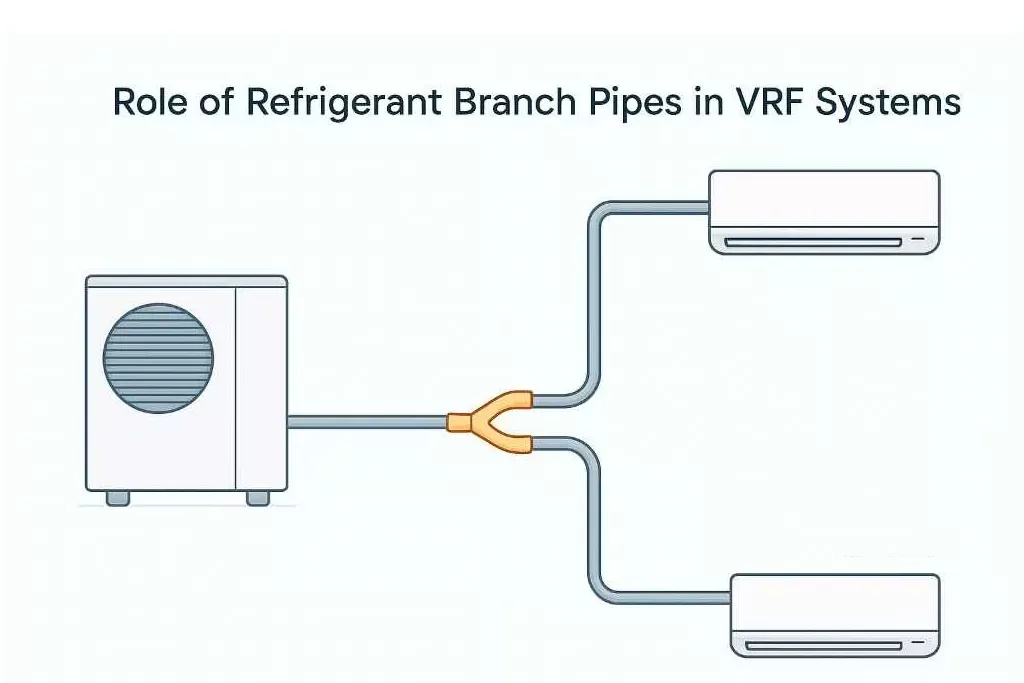
- VRF Refrigerant Branch Piping
Headers
- SAM Headers
- TA Headers
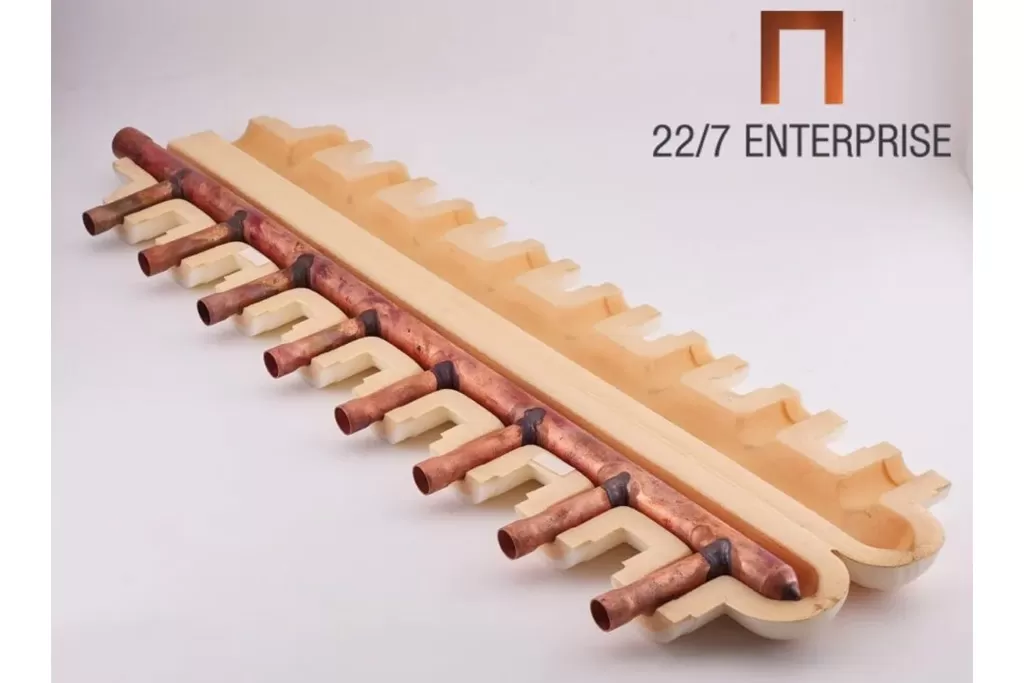
- Customized Headers
Copper Components
- Copper Compression T Fitting
- Copper Y Fitting
- Strainers
- Mufflers
- Stubs
- Commercial Tee's
- Copper Tee Joint
- Y-Type Distributors
- Unbrazed U & Y Fittings
- Copper Y-Joint
- Tubular Assemblies
Customized insulation
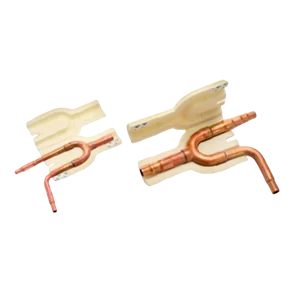
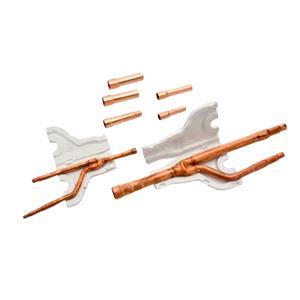
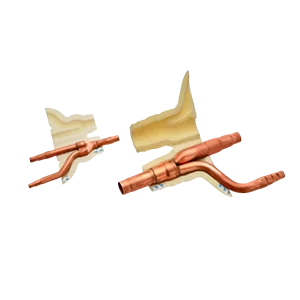
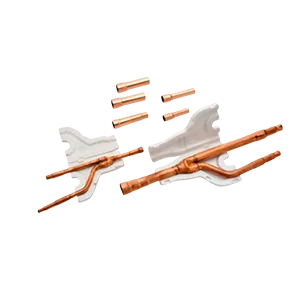
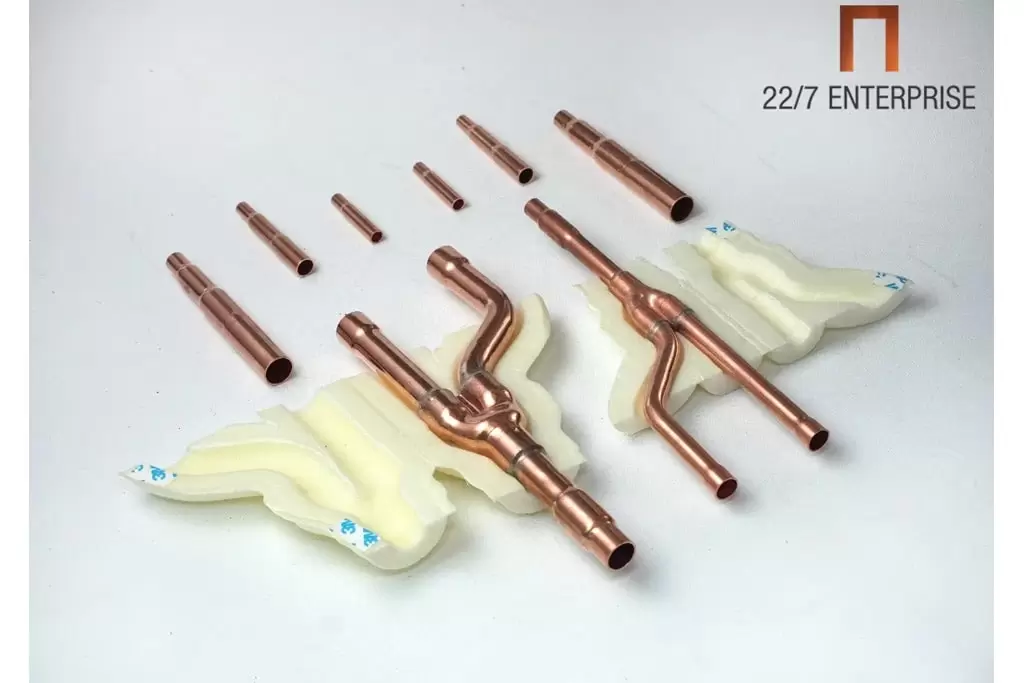
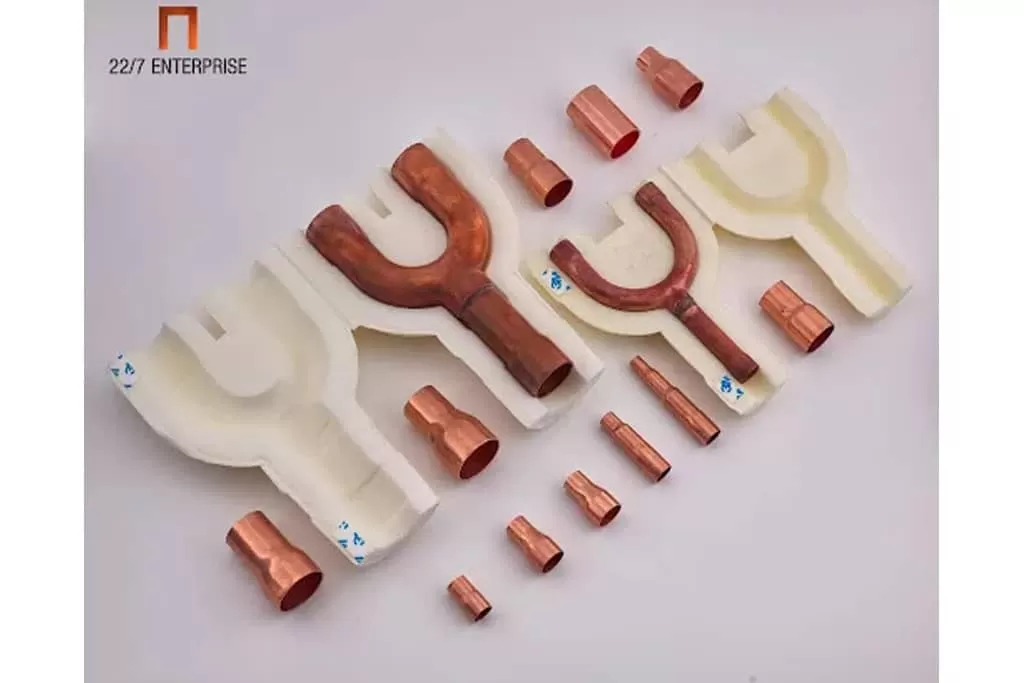
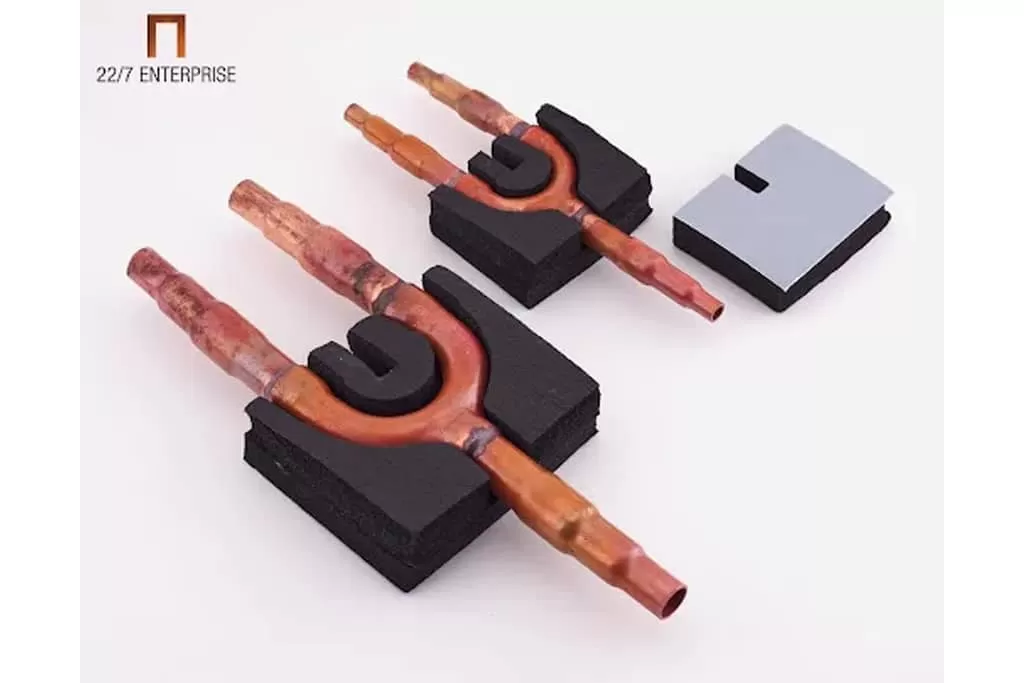
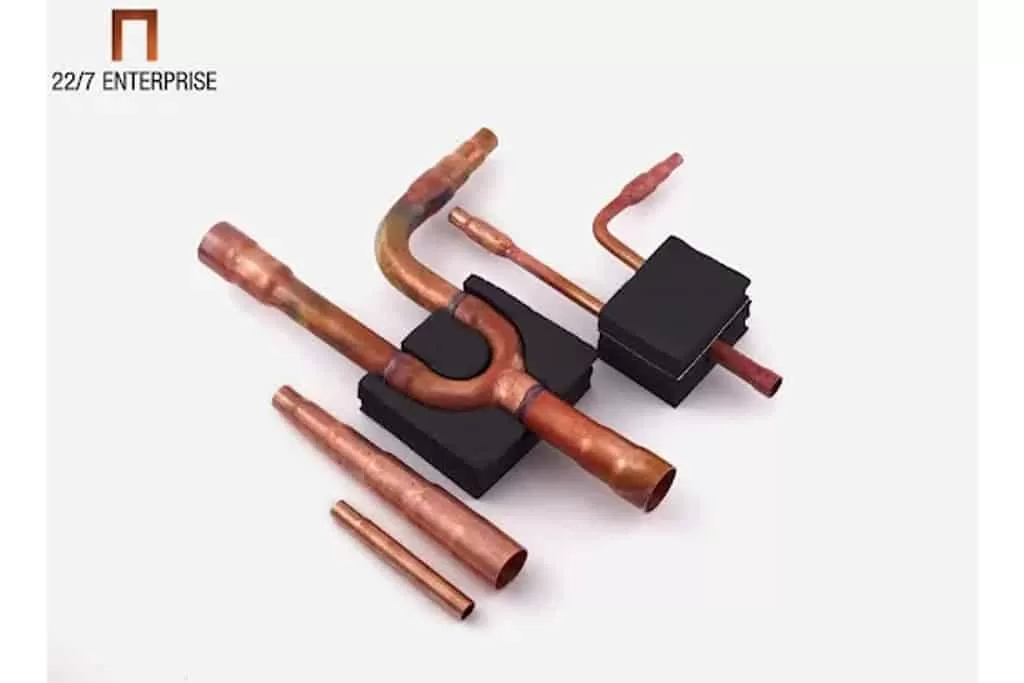
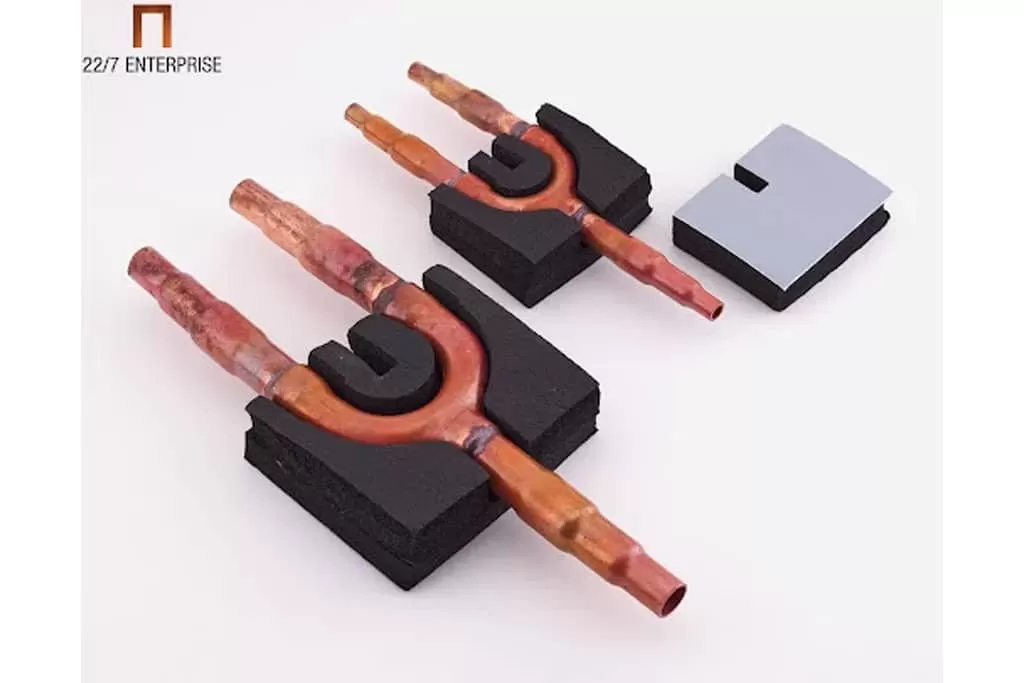
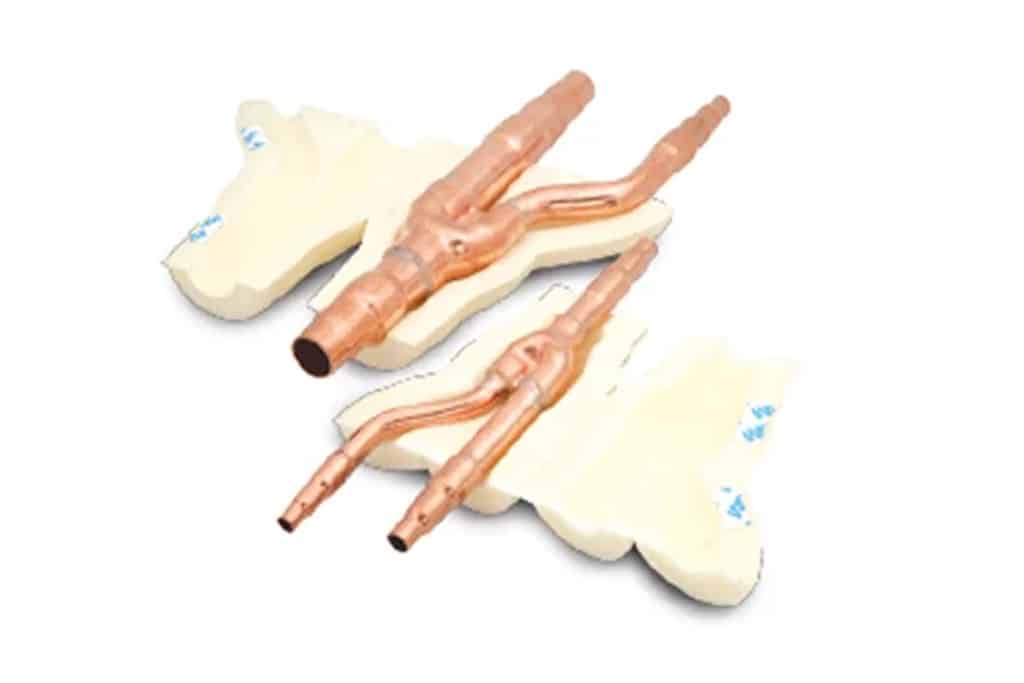
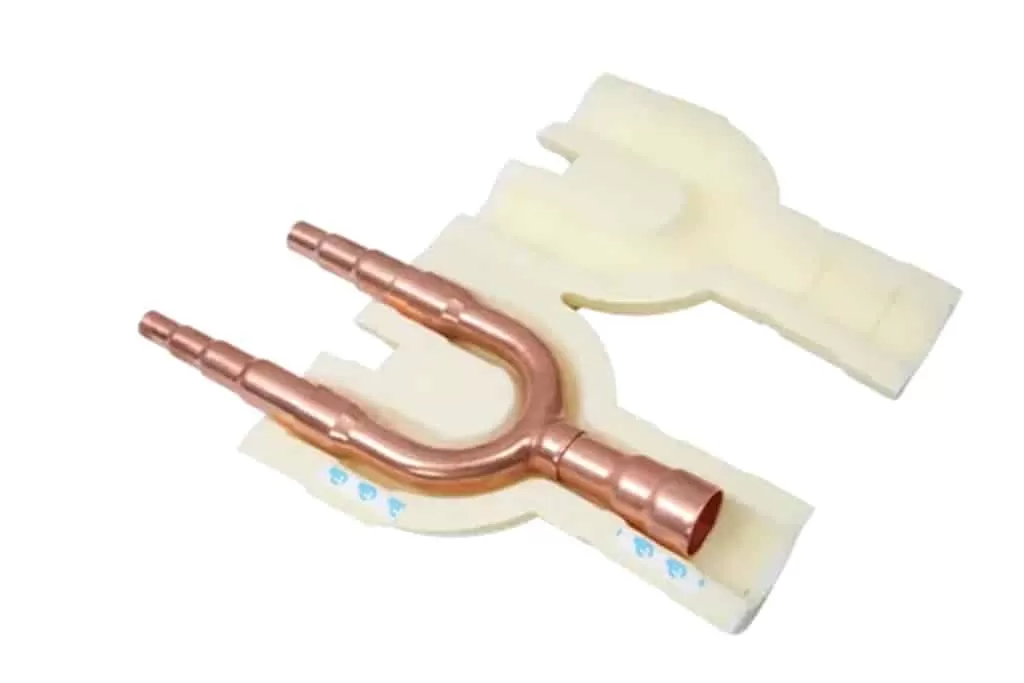
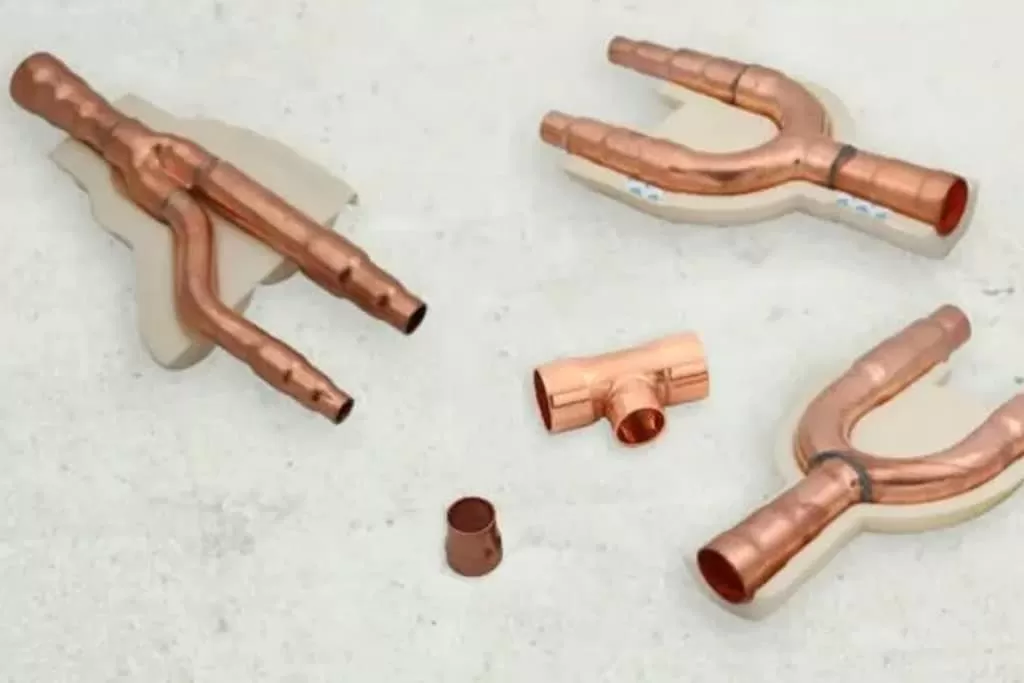
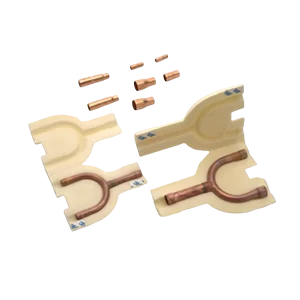
At 227 Enterprise Pvt. Ltd., our DA Series refrigerant branch piping kits come with factory fitted EPS and EPP insulation for VRV and VRF Y branch systems, making installation simple and fitment uniform. The ready to use design cuts site work, improves finish quality, and helps maintain steady thermal performance.
Expanded Polystyrene and Expanded Polypropylene insulation is light and economical, reducing heat loss while taking compressive load without damage. It offers steady thermal resistance with enough strength for low temperature piping where insulation must carry weight and stay stable during long service life.
EPS
Insulation
FEATURES OF DA Series With EPS Insulation
Easy installation design

Self Locking Design

RoHS & CE compliant

Superior Thermal Efficiency
Lightweight & Easy to Handle
Product specification
| Pipe-A | Pipe-B | Pipe-C | |
|---|---|---|---|
| Pi-KHRP-22T (Gas Side) | 12.7 (1/2) – 15.88 (5/8) – 19.05 (3/4) | 15.88 (5/8) – 12.7 (1/2) | 15.88 (5/8) – 12.7 (1/2) |
| Pi-KHRP-22T (Liquid Side) | 9.52 (3/8) | 9.52 (3/8) – 6.35(1/4) | 9.52 (3/8) – 6.35(1/4) |
| Pi-KHRP-33T (Gas Side) | 22.22 (7/8) – 19.05 (3/4) | 19.05 (3/4) – 15.88 (5/8) | 15.88 (5/8) – 12.7 (1/2) |
| Pi-KHRP-33T (Liquid Side) | 9.52 (3/8) | 9.52 (3/8) – 6.35 (1/4) | 9.52 (3/8) – 6.35 (1/4) |
| Pi-KHRP-72T (Gas Side) | 31.75 (11/4) -28,58 ( 11/8) – 25.4 (1) | 25.4 (1) – 19.05(3/4) – 15.88 (5/8) | 19.05 (3/4) – 15.88 (5/8) – 12.7 (1/2) |
| Pi-KHRP-72T (Liquid Side) | 15.81 (5/8) – 12.7 (1/2) | 12.7 (1/2) – 9.52 (3/8) | 12.7 (1/2) – 9.52 (3/8) – 6.35 (1/4) |
| Pi-KHRP-73T (Gas Side) | 38.10 (11/2) – 31.75 (11/4) | 31.75 (11/4) – 28.58 (11/8) – 25.4 (1) | 25.4 (1) – 19.05 (3/4) – 15.88 (5/8) |
| Pi-KHRP-73T (Liquid Side) | 15.88 (5/6) – 19.05 (3/4) | 19.05 (3/4) – 15.88 (5/8) – 12.7 (1/2) | 15.88 (5/8) – 12.7 (1/2) – 9.52 (3/8) |
OUR Products
Universal
Branch Pipe
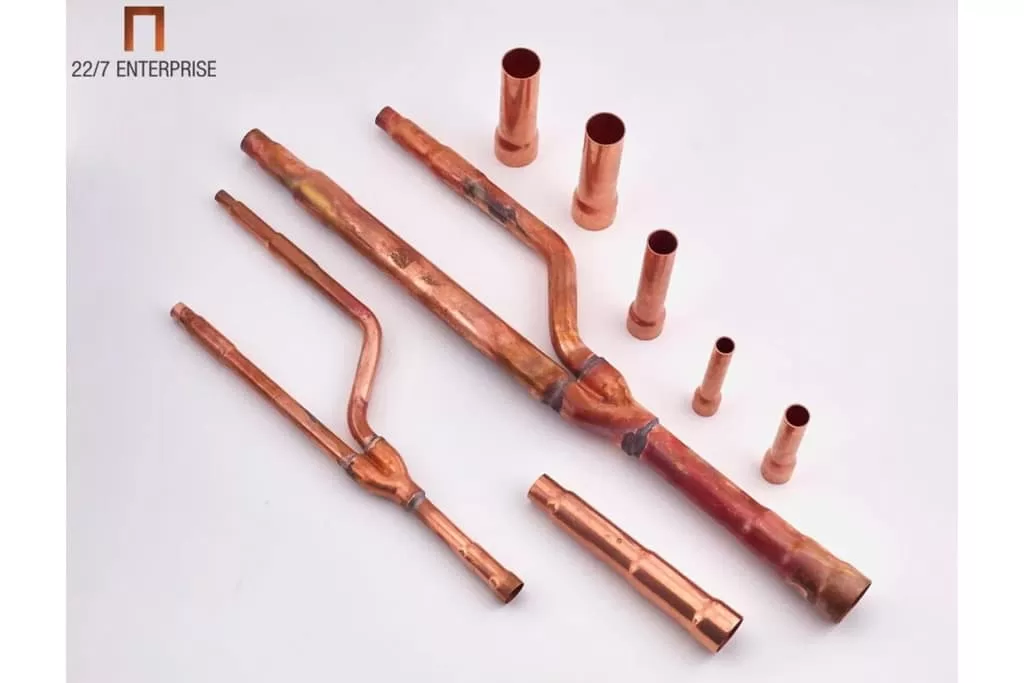
VRF Y Branch for VRF Air Conditioning Systems Compatible with R410 Refrigerant.
View Details
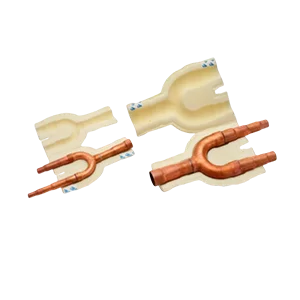
DA
Series
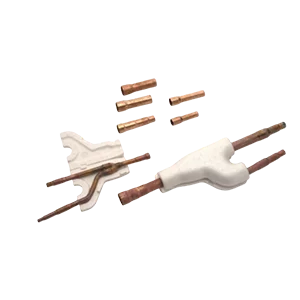
Refrigerant Branch Piping Kits for VRV / VRF Systems Operating with R410 Refrigerant.
View Details
ME
Series
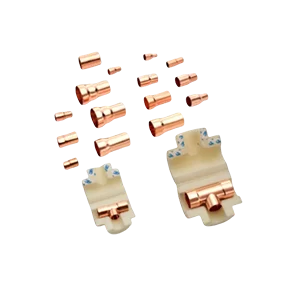
VRF Tee Joints for VRF Air Conditioning Systems Compatible with R410 Refrigerant.
View Details
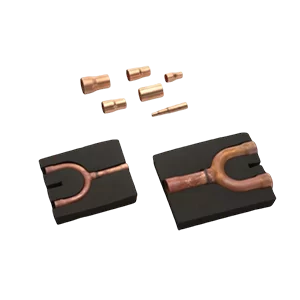
TA
Series
Refrigerant Branch Piping Kits for VRF Systems Operating with R410 Refrigerant
View Details
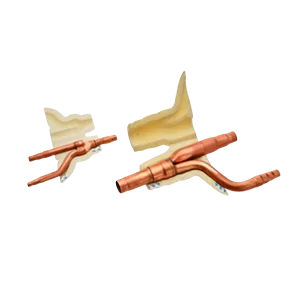
GR
Series
VRF Y Branch Refrigerant Distribution Kits for VRV / VRF Systems Operating with R410.
View Details

BSR
Series
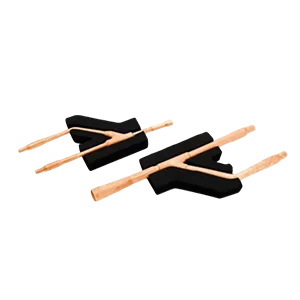
VRF Refrigerant Branch Piping Kits for VRF Air Conditioning Systems Compatible with R410A Refrigerant.
View Details
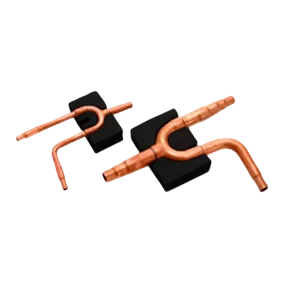
HAE
Series
VRF Refrigerant Branch Piping Kit for VRF Air Conditioning Systems Compatible with R410 Refrigerant.
View Details
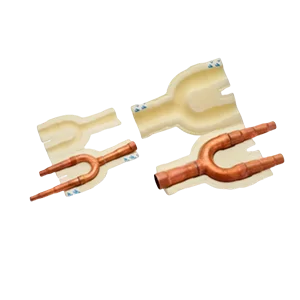
CL
Series
VRF Y Branch for VRF Air Conditioning Systems Compatible with R410 Refrigerant.
View Details
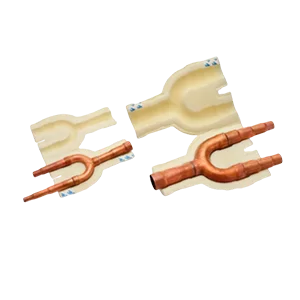
LNX
Series
VRF Y Joints for VRF Air Conditioning Systems Compatible with R410 Refrigerant.
View Details
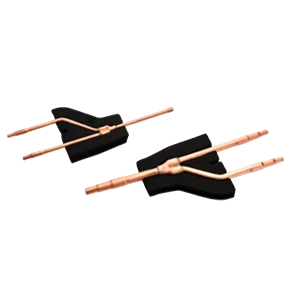
MHI
Series
VRF Refrigerant Branch Piping Kit for VRF Air Conditioning Systems Compatible with R410 Refrigerant
View Details

SAM
Series
VRF Y Branch for VRF Air Conditioning Systems Compatible with R410 Refrigerant.
View Details
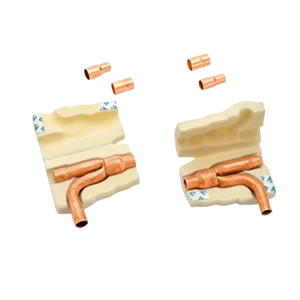
PNS
Series
VRF Y Joints for VRF Air Conditioning Systems Compatible with R410 Refrigerant.
View Details
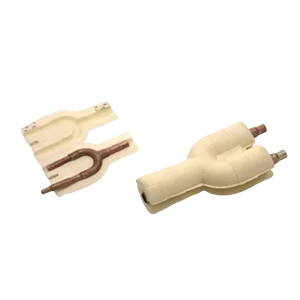
TRN
Series
VRF Y Branch for VRF Air Conditioning Systems Compatible with R410 Refrigerant.
View Details
AX
Series
VRF Y Branch for VRF Air Conditioning Systems Compatible with R410 Refrigerant.
View Details
VRF Y
Joint
Precision Manufactured VRF Y Joints for Optimal Laminar Refrigerant Flow and Efficient System Performance.
View Details

VRF Branch
Piping
Precision Manufactured VRF Y Joints for Optimal Laminar Refrigerant Flow and Efficient System Performance.
View Details
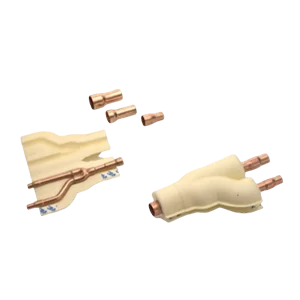
VRF Refrigerant
Branch Piping
Manufactured for Optimal Refrigerant Flow Distribution in VRF Systems Working on R410 Refrigerant.
View Details
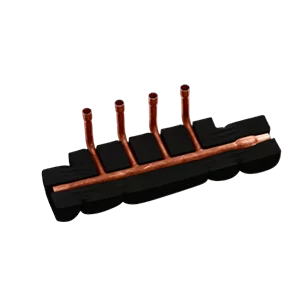
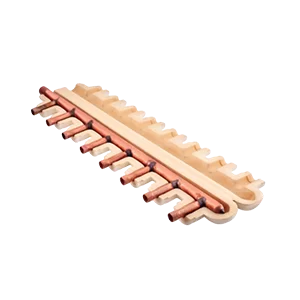
SAM
Headers
Precision Manufactured VRF Copper Header for VRF Systems Compatible with R410 Refrigerant.
View Details
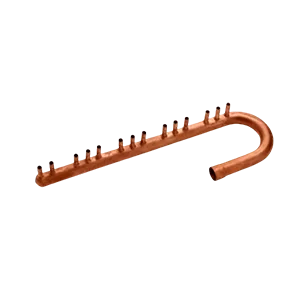
TA
Headers
Precision Manufactured VRF Copper Header for VRF Systems Compatible with R410 Refrigerant.
View Details
Customized
Headers
Tailor-Made VRF Copper Header Manufacturing as per Project Requirements.
View Details

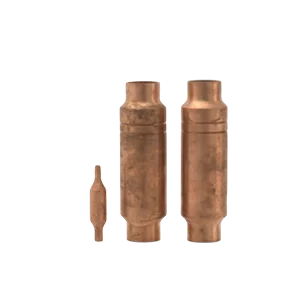
Copper Compression
T Fitting
Versatile Copper Compression T Fitting engineered for leak-free branches in refrigerant line sets.
View Details

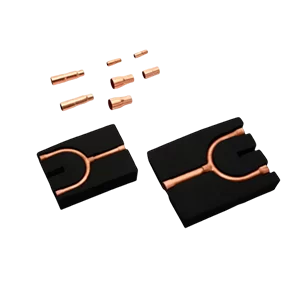
EPS
Insulation
Economical, closed-cell insulation for thermal and condensation control.
View Details
NBR
Insulation
Flexible, fire-resistant nitrile rubber insulation for demanding applications.
View Details
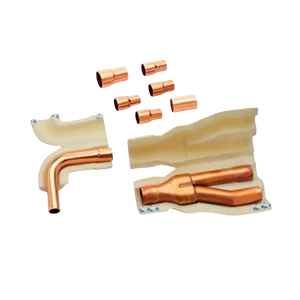
XLPE
Insulation
Cross-linked polyethylene foam for superior moisture and thermal resistance.
View Details
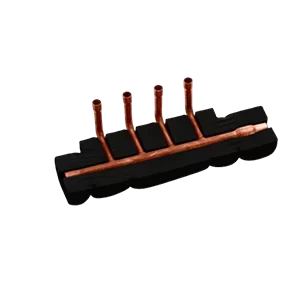
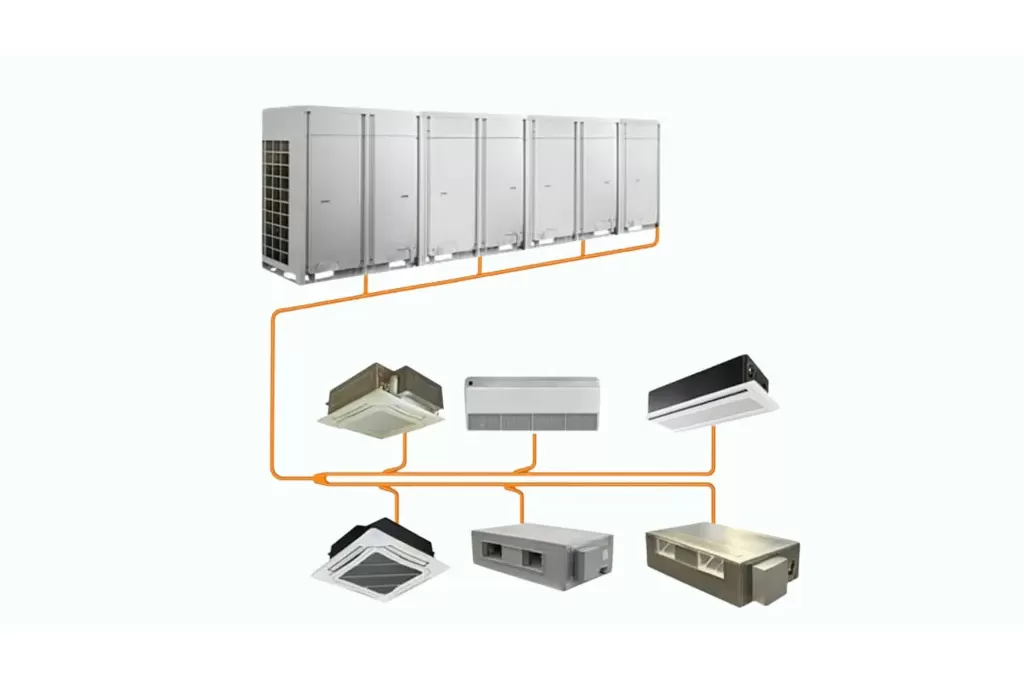
Customized
Insulation
Bespoke insulation solutions cut and tailored to your components.
View DetailsWhy 227 Enterprise
Testimonial's
The precision fit of the EPS insulation eliminated on-site modifications, saving us significant installation time.
Procurement Head, MEP Consultancy,
Saudi ArabiaSwitching to these joints noticeably improved the energy efficiency metrics in our latest hotel project.
Project Manager, HVAC Contractor,
UAEThe product quality and consistency are unmatched, which is critical for our large-scale residential developments.
Technical Director, Real Estate Developer,
India227 Enterprise provided perfectly customized sizes for a retrofit project where standard parts failed.
Service Engineer, Facility Management Company,
QatarReliable delivery and superior thermal performance have made these our default choice for VRF piping.
Owner, Air Conditioning Distributor,
OmanOur Blogs
FAq's
What is an EPS insulation and what is its purpose in VRF systems?
EPS (Expanded Polystyrene) is a closed-cell rigid foam, foamboard insulation, which is characterized by superior thermal resistance and lightweight characteristics. In VRF systems, insulating refrigerant branch junctions are required, to ensure undesirable heat transfer, to remove condensation to reinforce energy efficiency, which has a direct impact on lowering operating expenses and indirectly increases the system life.
What is the comparison of DA Series EPS insulation into the standard XLPE insulation?
EPS insulation works by slowing down the transfer of heat, so the piping is better protected from outside temperature changes than with many traditional materials. When it’s installed properly, the refrigerant inside the line can hold its temperature more steadily, which helps the system run efficiently and keeps energy use in check. It also plays a part in reducing surface condensation. That said, the right insulation isn’t chosen on thermal performance alone, site conditions, moisture exposure, and the way the system is designed all need to be looked at before making the final selection.
Do you offer EPS insulation for VRV/VRF branch piping applications?
Yes. 227 Enterprise provides EPS insulation designed to enhance thermal efficiency and prevent condensation in VRV/VRF branch piping systems. The insulation helps maintain stable refrigerant temperatures, reduces energy loss, and supports long-term system reliability when installed as per project and environmental requirements.
What are the main advantages of your designed-insulation EPS?
We have our own specially designed EPS insulations which are pre-shaped to the exact shapes of the Y-joint to ensure a perfect fit. This helps seal all air gaps or thermal bridges and provides the system with the maximum thermal efficiency, eliminates condensation, and makes the installation of the system easy and treats it with a clean and professional finish that works throughout the lifespan of the system.
What is the method of installation of the EPS insulation on the Y-joint?
EPS/EPP insulation is made in a pre-slit, clam-shell form so it can be placed easily around even complicated joint shapes. It locks into position on its own, so there’s no need for special tools or adhesives. This makes installation quick on site, while still giving a neat, continuous insulation layer without gaps.
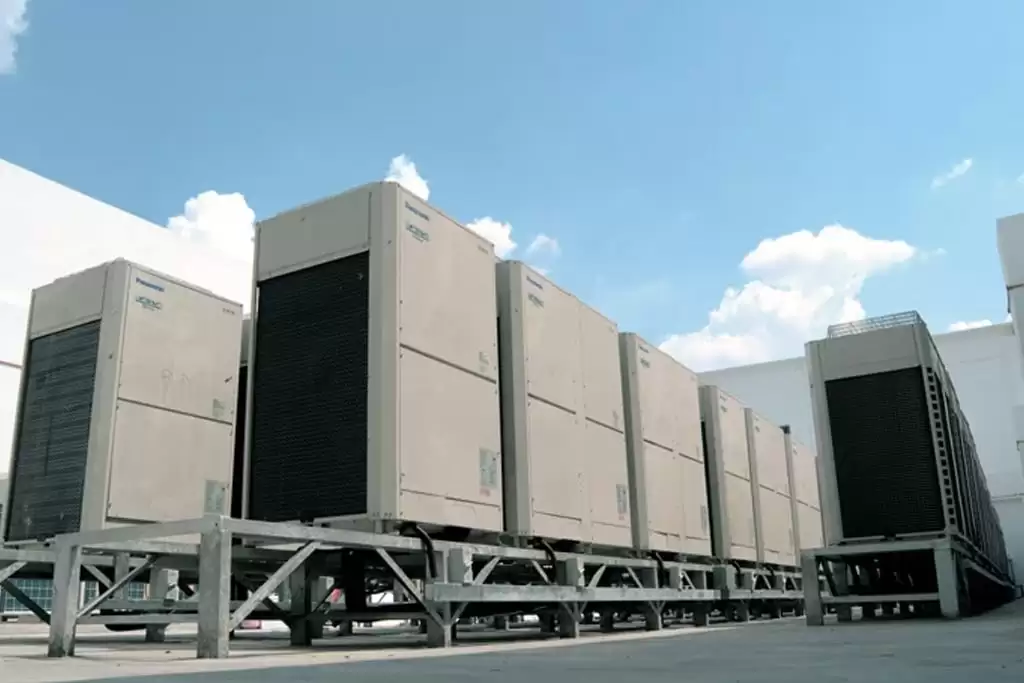
What are the quality and safety requirements of your products?
Every joint is pressure-tested up to 5.2 MPa before it leaves us, so we know it’s properly sealed and ready for actual working conditions. The EPS insulation we use is fire-resistant and also meets RoHS and CE norms. In practical terms, this means the product stays consistent in quality, follows the required safety and environmental guidelines, and performs the way it’s expected to on international projects.
How long is the lead time of orders?
For customized specifications or bulk orders, we provide a specific timeline after reviewing your detailed requirements. We prioritize open communication and will work with your project's critical path to establish a mutually agreeable schedule that meets your installation deadlines.
How long is the lead time of orders?
In the case of a conventional DA Series item, we normally have a 7-10 day dispatch lead time. In case of customized or bulk orders, we will give you a particular timeline after you present your detailed requirements and we will maintain a communication line with this and a good schedule to match your project critical path and deadlines of setups.
Does it provide warranty support on the DA Series with EPS insulation?
Yes, we offer a warranty on the DA Series against defects in product and workmanship for a period of 6 months. We ensure that the copper joints and EPS insulation are free from manufacturing defects and meet the intended performance under normal operating conditions, supported by our quality assurance and customer service.
What is the relationship between energy saved in a VRF system with the use of EPS insulation?
With the minimization of thermal transfer, EPS insulation helps in reducing the workload of the system to cover the heat gain/loss. This reduces the compressor energy requirements by a large margin increasing the Coefficient of Performance (COP). The outcome will be an immediate decrease in the electricity consumption and operational expenses which will provide a high payoff on the investment over the lifespan of the system.